
HOW TO GROW GOMPHRENA
Gomphrena (or globe amaranth, Gomphrena globosa) is a fantastic and generous flower. It's promoted as a half-hardy annual, and a heavy frost will apparently see it curl up its toes - but in my garden, where we only get some light frost, my patch of gomphrena went on and on and on all winter. In the end I had to pull it out to make room for other blooms. See wheelbarrow image below - it was a bit heartbreaking to pull out such abundant beauty, and there was only so much I could dry and store.
It dries like a champion
It dries really well, and could make a terrific substitute for paper daisies in a garland. In fact, I had a go at making a garland using gomphrena over on Instagram - here. I alo use it in wreaths and mini bouquets for jazzing up presents.
How to grow it
Seed raise or sow direct - these are so adaptable you can even grow them through winter in warmer areas like the tropics. In fact, if you're in a super warm area, consider skipping the spring planting altogether and adding these to your autumn sowing wish list instead.
The basics:
Height: compact varieties sit around 20–30cm, taller cutting varieties reach up to 60cm or so
Sun: full sun - the more, the better
Soil: not fussy, but wants good drainage; it's heat tolerant and fairly drought resistant once established, so don't love it to death with a soggy, overwatered bed
My favourites
It's hard to pick a favourite, as they're all beautiful, but if forced to do so on pain of certain death, I'd suggest Audray Rose and Strawberry Fields (I love using these red ones in Christmas wreaths) - but honestly, grow whichever you can get your hands on. There are lots of Australian suppliers, including Veggie & Flower Garden Seeds, The Seed Collection and Happy Valley Seeds.
Their branchy habit can make them a bit fiddly as a cut flower when preparing them for bouquets, but they're so brilliant I can forgive them for that.
A stand-out in the garden
They're fast growing, dry beautifully, and are so different to most people's idea of a "flower" that they make a genuinely distinctive feature in the garden.
And yes - it's edible (with a caveat)
The flower heads themselves are the well-documented edible part - traditionally steeped as a tea, or the petals used as a garnish. Claims about the leaves of juvenile plants being eaten, or the seeds being popped like popcorn or used as a grain substitute, turn up around the place, but it’s worth noting that "globe amaranth" (Gomphrena globosa) and true grain amaranth (Amaranthus) are different plants in the same family, and it's the latter that's genuinely famous for popping like popcorn. So: treat the "pop it like popcorn" claim as an internet rumour rather than a recipe, and do your own digging before you try it.
Think you might give growing gomphrena a go? Tag me in on any Instagram posts - I’d love to see them.
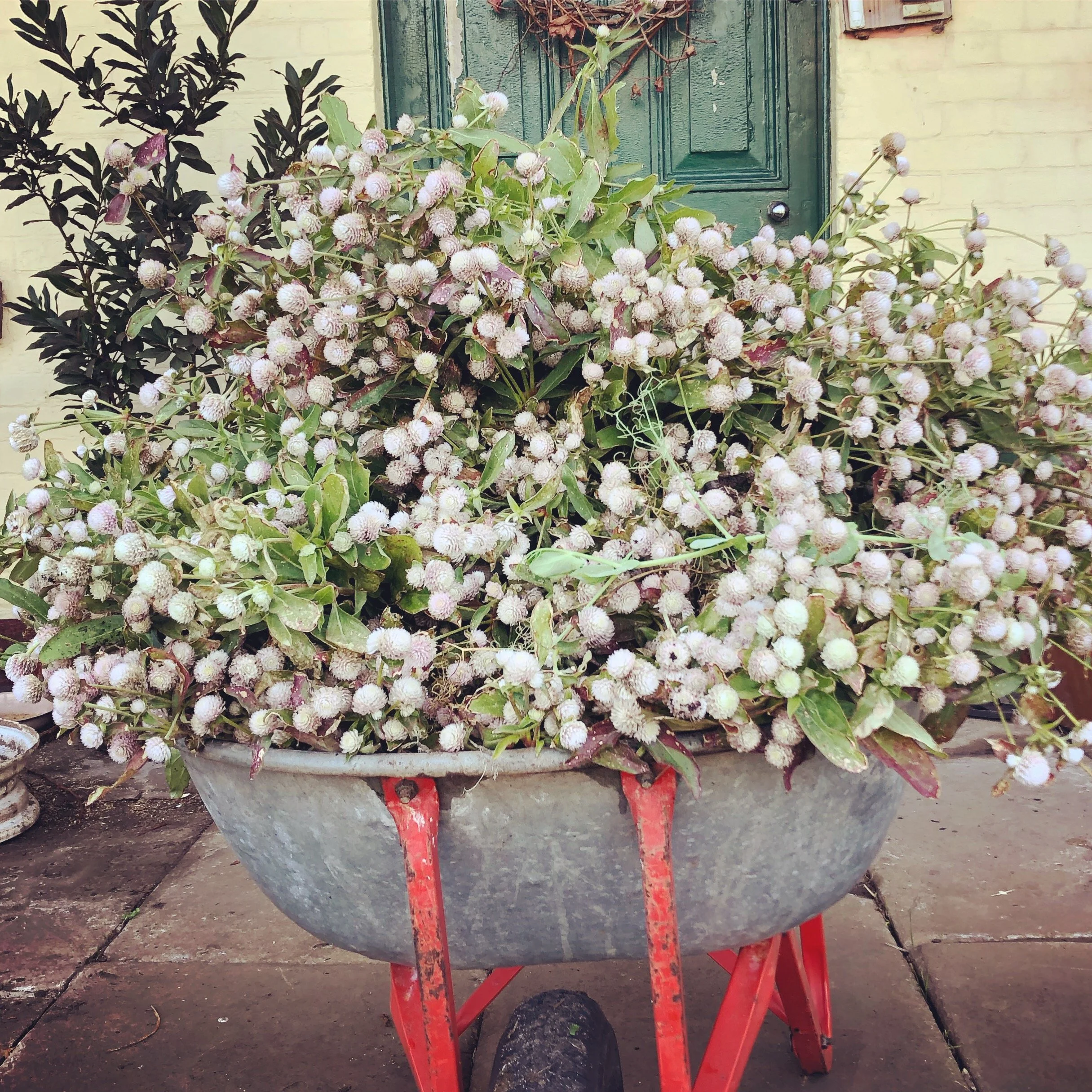
Overflowing wheelbarrow filled with gomphrena